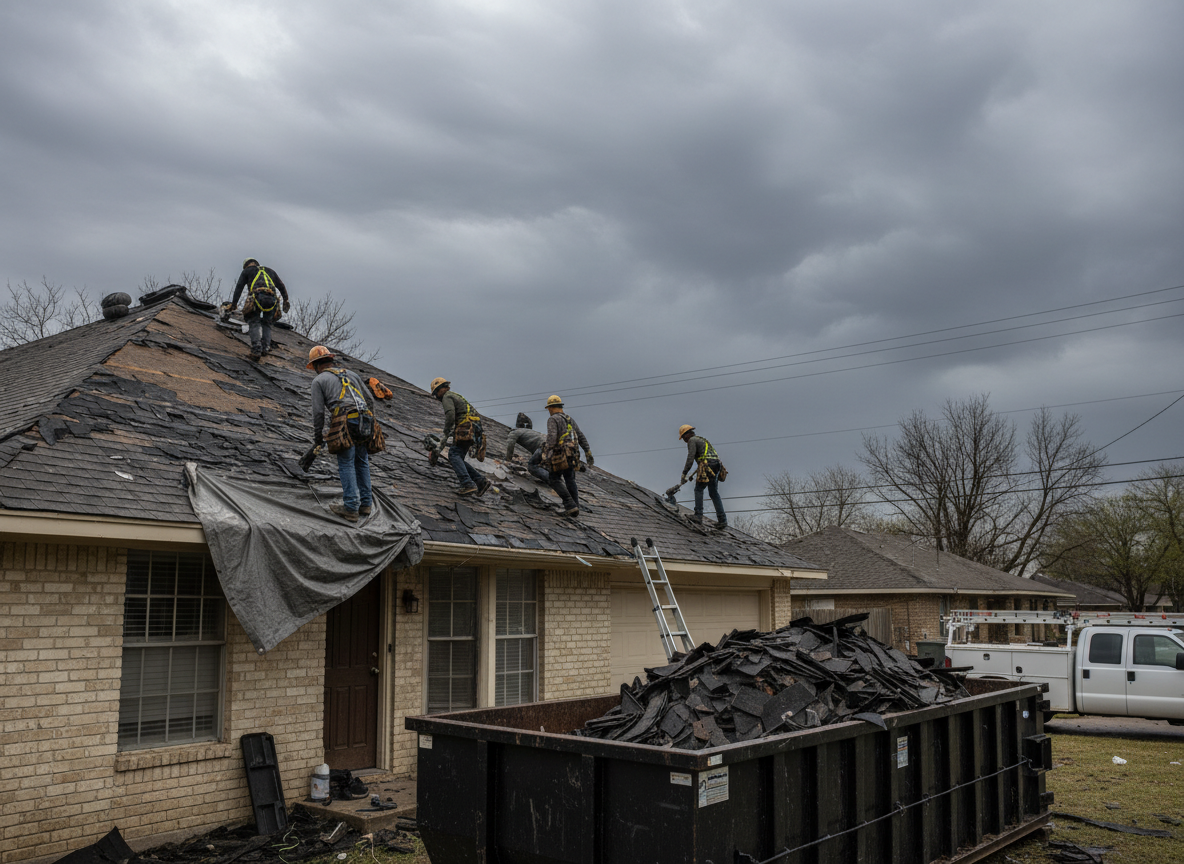
The Southeast is the region where roofs are tested by water arriving sideways. Eight states share a long hurricane season, a humid subtropical climate and, in Florida, a building code that treats roof coverings as approved products with tested fixing systems. A roof here is expected to shed an ordinary afternoon storm without comment and to survive a named system without losing its edges, and those two expectations lead to different details.
Eight states, and the hurricane line
- Florida — the most regulated roofing market in the country, with product approval for coverings and an additional chapter of the building code inside the High-Velocity Hurricane Zone.
- Georgia — inland wind, heavy summer storms and a large shingle housing stock.
- Alabama — Gulf exposure in the south, hail and wind inland.
- South Carolina — a long barrier-island coast and a hurricane history that reaches inland.
- North Carolina — coastal exposure east, mountain snow west, and a wide middle.
- Tennessee — inland wind and hail, with ice in the eastern mountains.
- Mississippi — Gulf coast exposure and some of the heaviest rainfall in the region.
- Louisiana — subsidence, humidity and storm surge, with a roofing stock that has been rebuilt repeatedly.
June to November: what a landfall does
Hurricane season
The Atlantic season runs from the first of June to the end of November, with activity concentrated toward late summer and autumn. A landfall brings three separate roofing problems: wind that pulls at edges and ridges, rain driven horizontally at walls and openings, and debris that impacts the covering.
Wind damage starts at the perimeter. Edge metal, rake trim, ridge caps and the roof-to-wall connection are the details that fail first, and once an edge lifts, the failure propagates inward. A roof that loses its ridge in a storm usually lost the details holding it long before.
Wind-driven rain
Rain pushed at forty or fifty miles an hour does not need a hole to enter. It finds the head of a window, a cladding joint, a stucco crack, a vent, the junction where roof meets wall. This is the region's signature leak, and it is frequently misdiagnosed as a roof failure because the water appears at a ceiling near the wall.
Heat, humidity and growth
The combination of heat and moisture keeps roof surfaces damp for long periods. Algae streaking on shingles is cosmetic but signals the condition; moss and lichen hold water against the covering; and attic humidity in a poorly ventilated roof can produce condensation that behaves like a leak.
Inland wind and hail
Away from the coast the weather is continental rather than tropical: spring hail, straight-line wind, and in the northern parts of Georgia, Alabama and Tennessee, occasional winter ice.
Why Florida's tile roofs leak through the tile
Clay and concrete tile dominates much of Florida, particularly in the south and along both coasts, and it brings the region's central roofing fact: the tile outlives the underlayment beneath it by decades. A tile roof that looks immaculate can be at the end of its underlayment life, and the repair is a lift and relay rather than a tile replacement.
Architectural asphalt shingle covers most of Georgia, the Carolinas, Tennessee and inland Alabama. In this climate shingles age from both sides: sun and heat above, attic heat and humidity below.
Metal roofing appears on coastal properties, on agricultural buildings and increasingly on custom homes, where uplift resistance and longevity justify it. Standing seam systems with concealed fixings perform best in wind, and the fixing pattern is specified rather than assumed.
Low-slope membrane roofs cover commercial buildings, and in Louisiana and coastal Mississippi they are also common on residential additions and raised structures.
Impact-rated products matter here as well, not for hail but for wind-borne debris, and in the High-Velocity Hurricane Zone the requirements are explicit.
City by city across the Southeast
- Florida: Miami, Fort Lauderdale, West Palm Beach, Tampa, St. Petersburg, Orlando, Jacksonville, Tallahassee, Naples, Fort Myers
- Georgia: Atlanta, Savannah, Augusta, Columbus, Macon
- Alabama: Birmingham, Mobile, Montgomery, Huntsville
- South Carolina: Charleston, Columbia, Greenville, Myrtle Beach
- North Carolina: Charlotte, Raleigh, Wilmington, Asheville, Greensboro
- Tennessee: Nashville, Memphis, Knoxville, Chattanooga
- Mississippi: Jackson, Gulfport, Biloxi, Hattiesburg
- Louisiana: New Orleans, Baton Rouge, Lafayette, Shreveport, Lake Charles
How the work changes from the coast inland
In South Florida, the High-Velocity Hurricane Zone governs. Miami-Dade and Broward have their own product approval process and testing requirements, and a covering installed there has to be part of an approved system with a specified fixing pattern. That is not paperwork: it is what allows a roof to stay on in a storm that removes others.
Along the rest of the Florida coast, the state product approval system applies, and the wind provisions of the Florida Building Code set the design requirements. A repair that uses a visually similar product from a different supplier can be non-compliant even when it looks identical.
In coastal Georgia, South Carolina and North Carolina, the exposure is a mix of hurricane and nor'easter, and the barrier islands bring salt, wind and a shorter maintenance cycle. Roofs there are inspected after every named system, and the details at edges and ridges are the first thing to check.
Inland across Georgia, Alabama, Tennessee and the Carolinas, the work is closer to the national pattern: hail and wind damage, aging shingle, and the occasional ice event in the mountains. The difference is the summer storm intensity and the humidity that keeps a failing roof damp.
In Louisiana and coastal Mississippi, subsidence and repeated storm exposure mean roofs are often rebuilt rather than repaired at the margin. The details that matter are the same ones that matter everywhere on the Gulf: edges, ridges, wall junctions and penetrations.
What to have ready before you call
The state and city, the covering type, the age of the roof, and whether the roof is currently leaking. If a storm has passed, roughly when. Whether the property is in a hurricane zone county, since that changes which products can be used.
Call (833) 406-0167 and describe what you are seeing. In this region the first question is usually whether the problem is wind, water arriving sideways, or age.